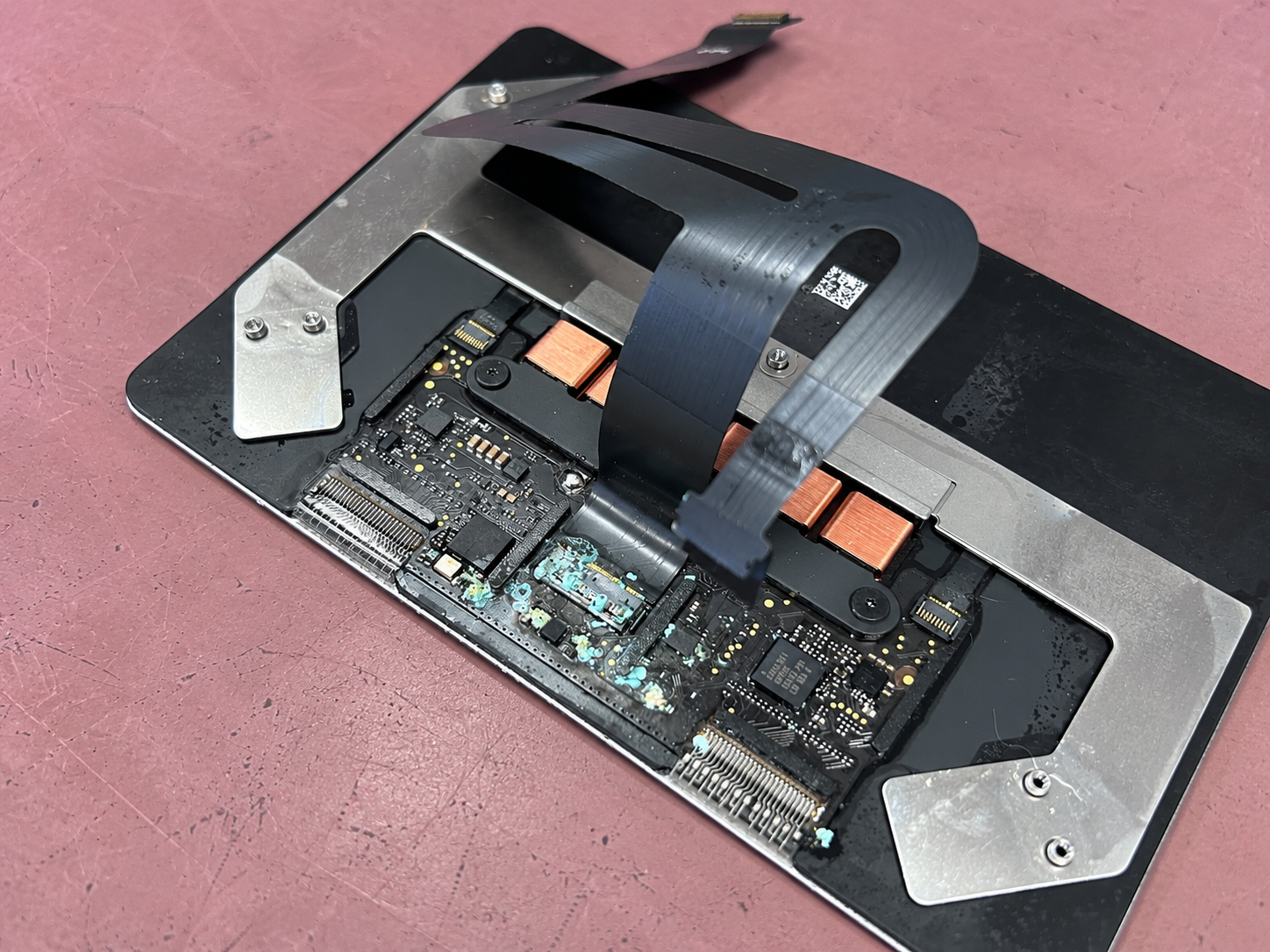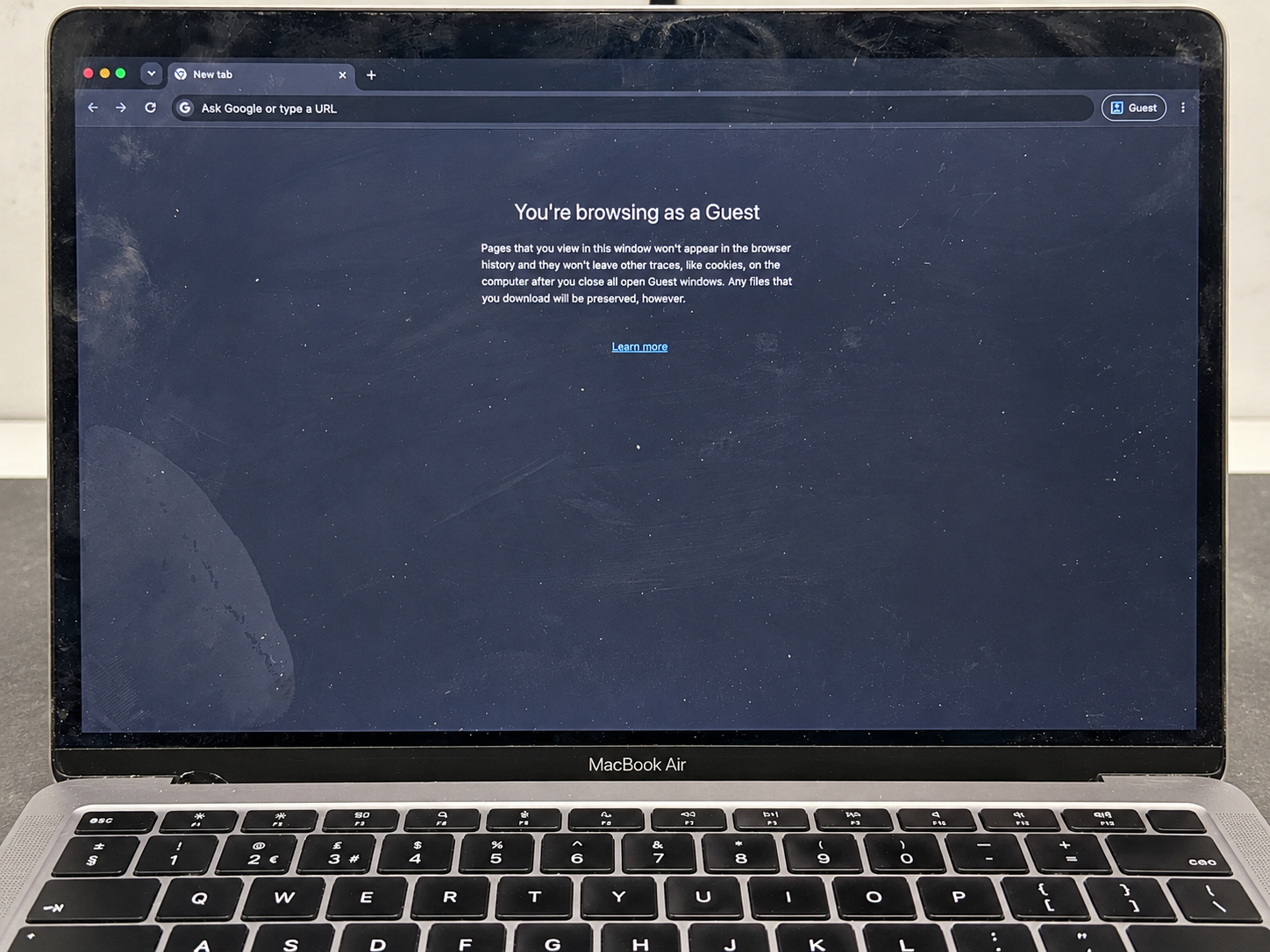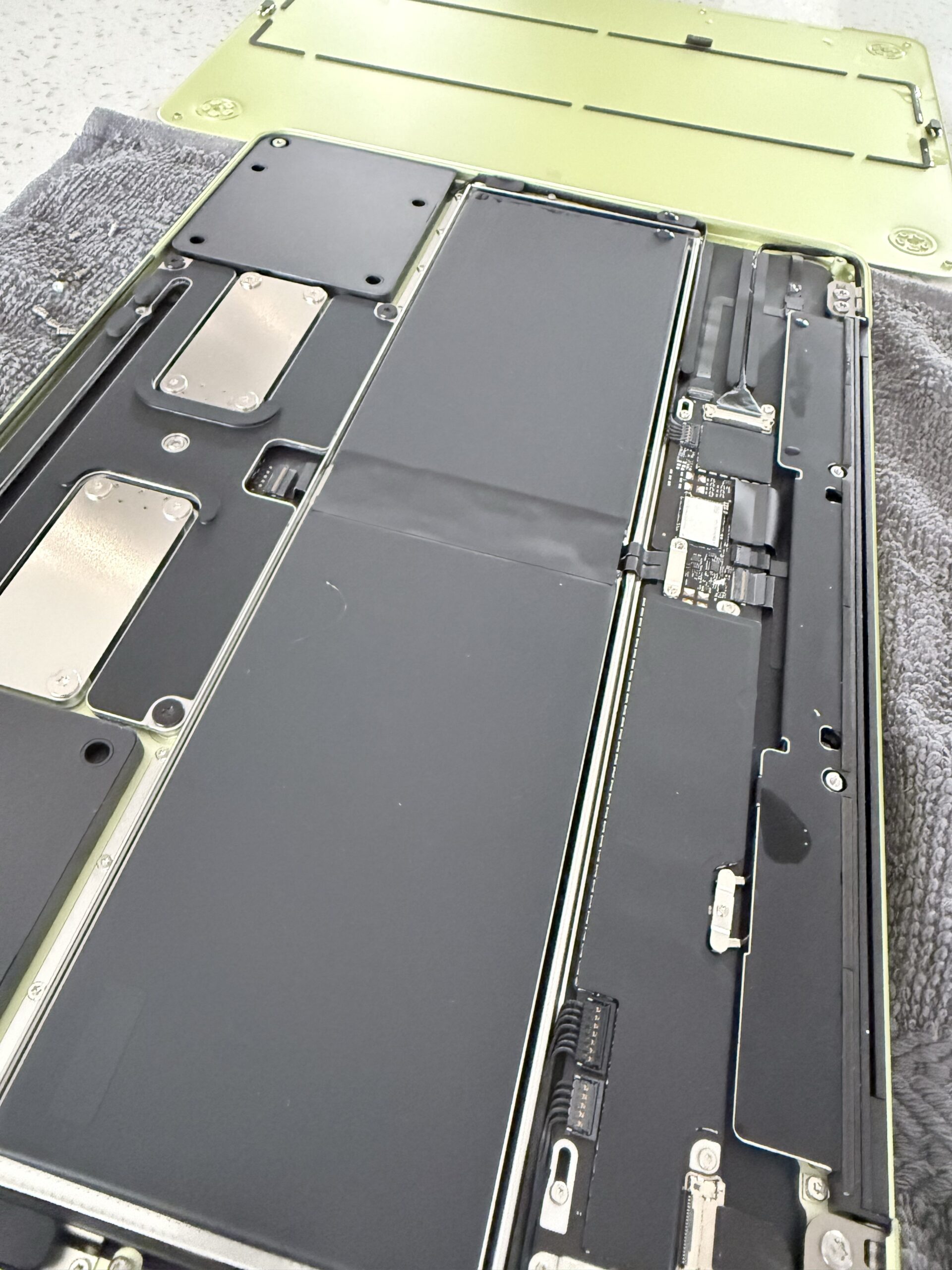
From our workshop · MacBook board diagnosis
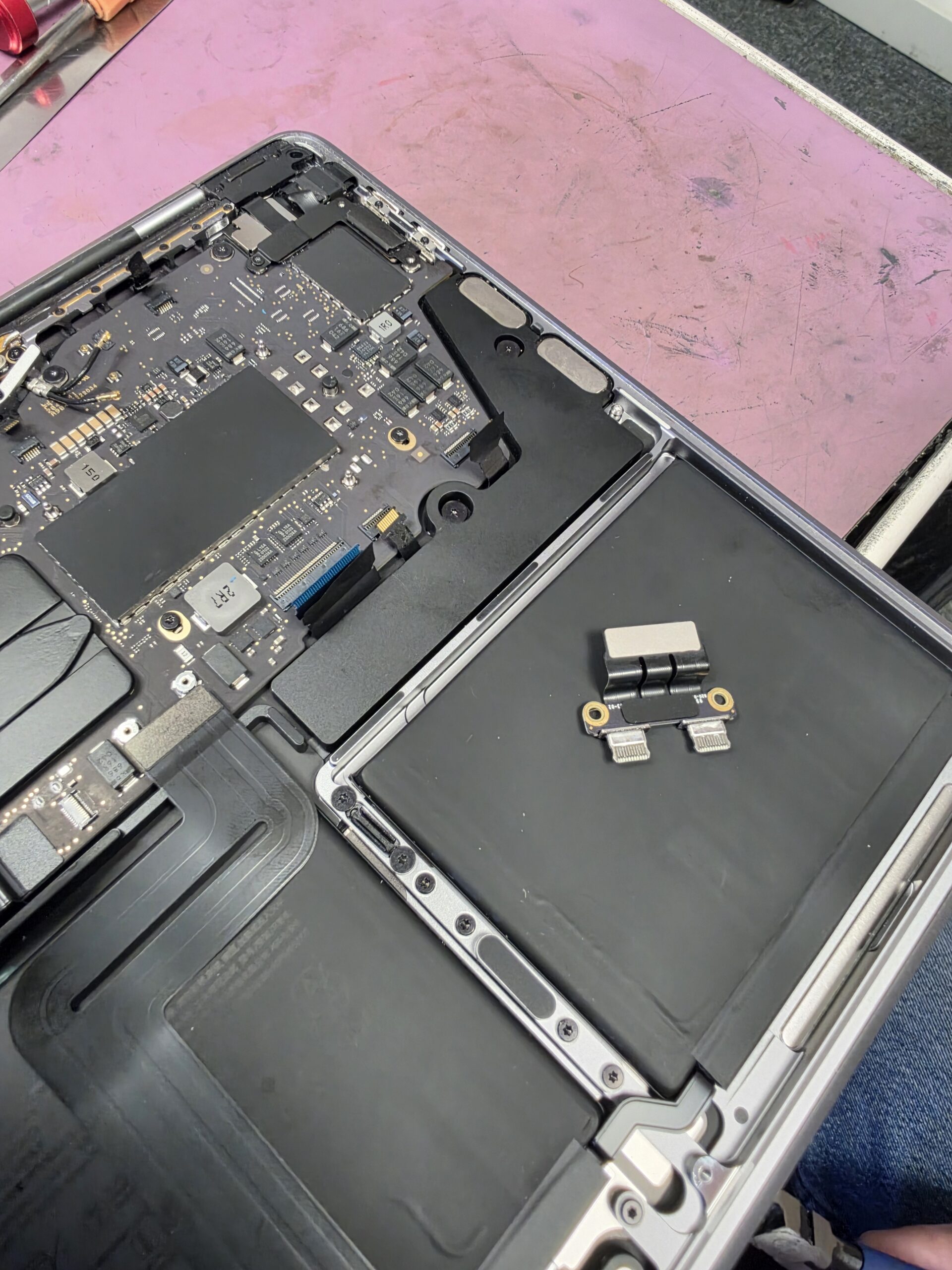
Belfast computer repair often goes much deeper than replacing a screen or battery. At iPhoneBits, our family-run workshop diagnoses laptops and MacBooks down to board and component level when required. This completely dead MacBook Pro A1990 is a good example of why that matters.
The initial USB-C reading gave us a starting point. Careful testing of logic board 820-01814-01 then traced the fault to its NAND/storage circuitry. The outcome was an honest assessment: the original board was beyond economical repair.
This repair at a glance
Machine: MacBook Pro A1990
Symptom: completely dead; approximately 5V rather than the expected 20V
Investigation: power-rail measurements, controlled voltage injection and circuit isolation
Finding: short associated with the NAND/storage circuitry
Decision: further work on the original board was not financially sensible for this machine.
MacBook Pro arrives completely dead
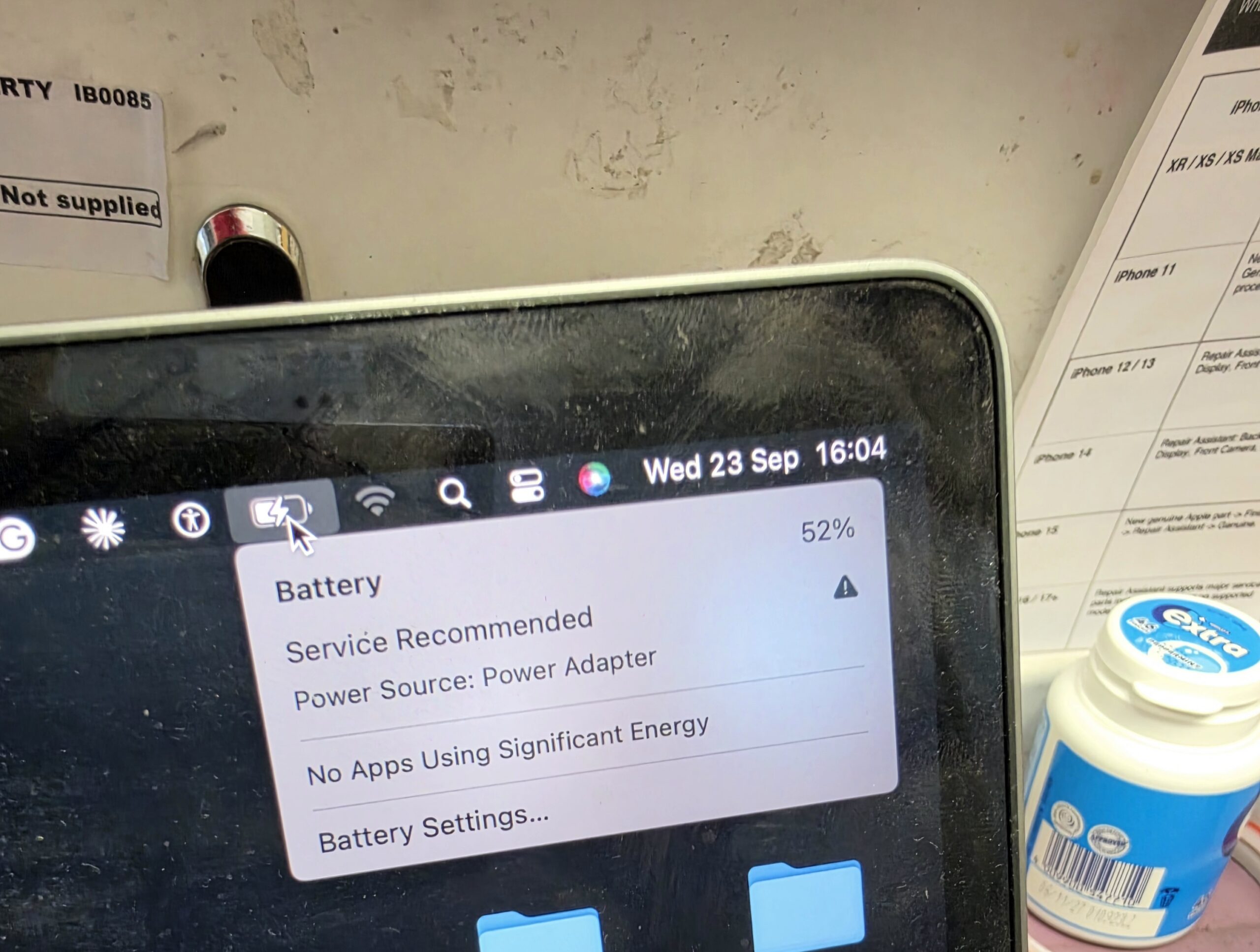
This A1990 came into iPhoneBits with no power. When we connected our USB-C power/current meter, it would only negotiate approximately 5V, rather than the 20V we expected with the appropriate charger.
That told us normal power negotiation was not completing and gave us a reason to investigate the board. It did not identify the failed component by itself.
Why should a MacBook pull 20V?
USB-C charging starts at a basic 5V supply. With a suitable charger and cable, the MacBook and charger communicate so the supply can increase to the higher voltage needed for normal charging. For this A1990, we expected negotiation to reach 20V.
5V is a diagnostic clue, not a NAND diagnosis. Charger, cable, USB-C and board faults can interrupt that process. Not every MacBook stuck at 5V has a NAND fault. We confirmed the cause on this particular machine through the tests below.
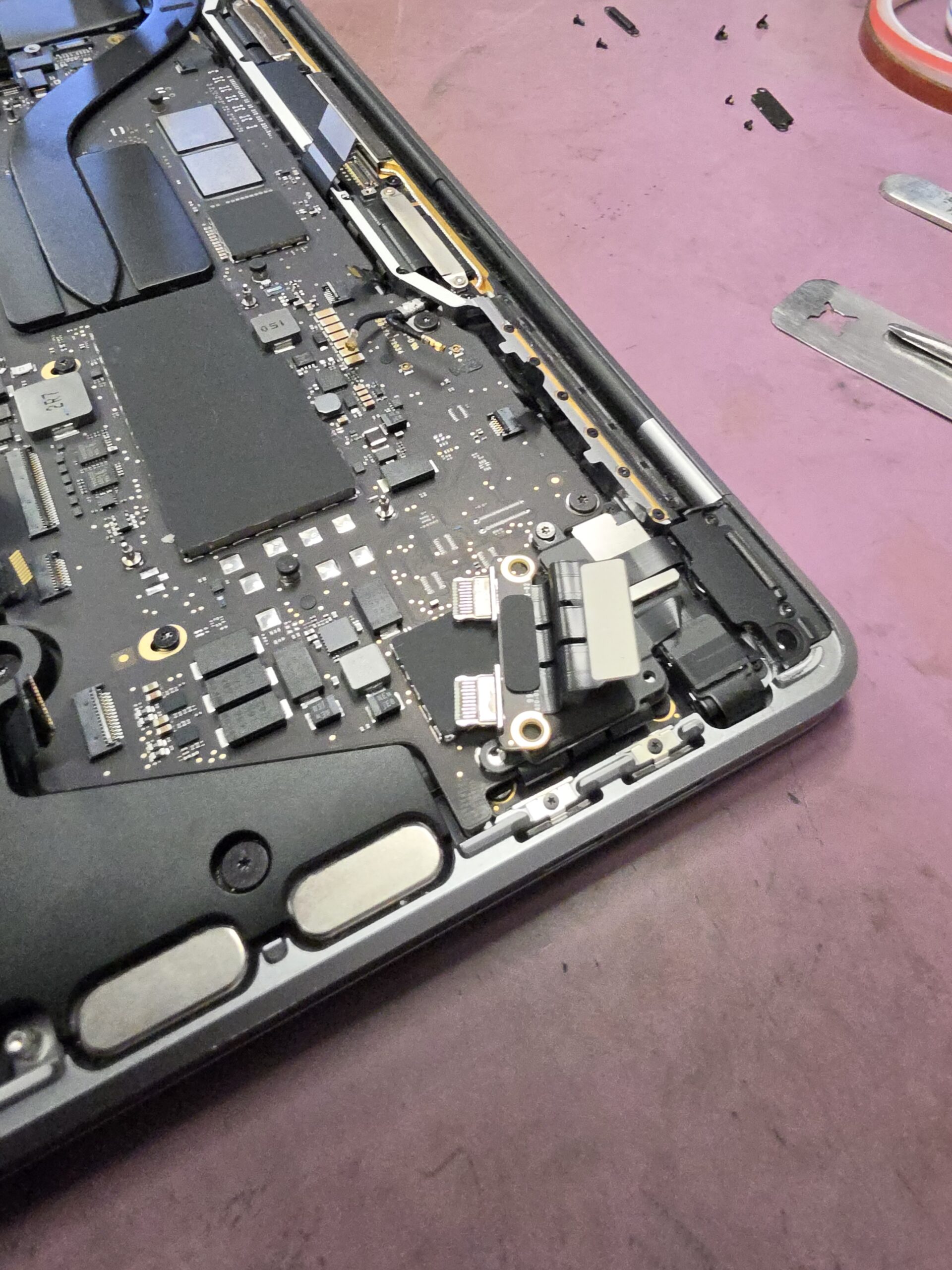
Logic board removed for testing
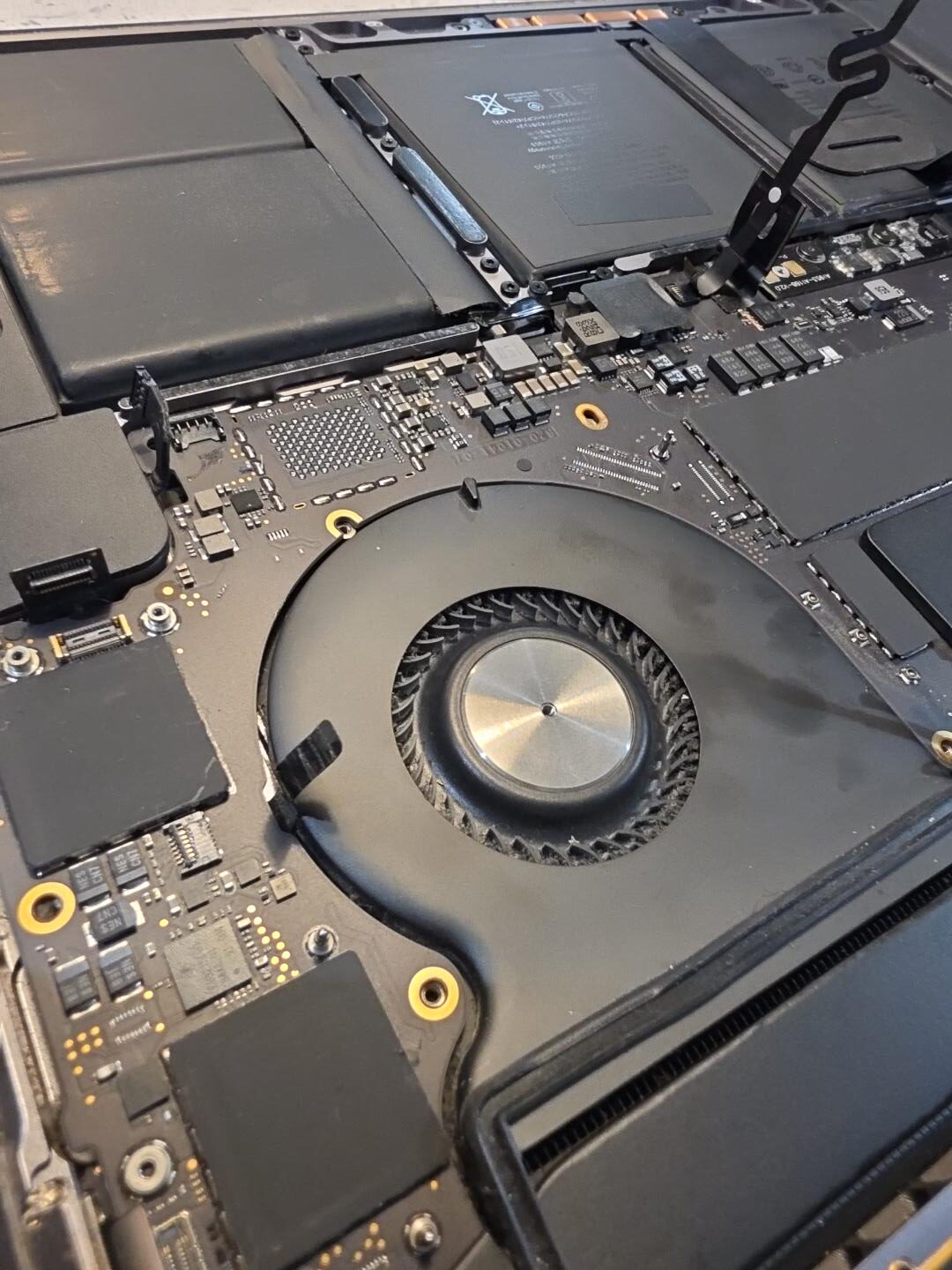
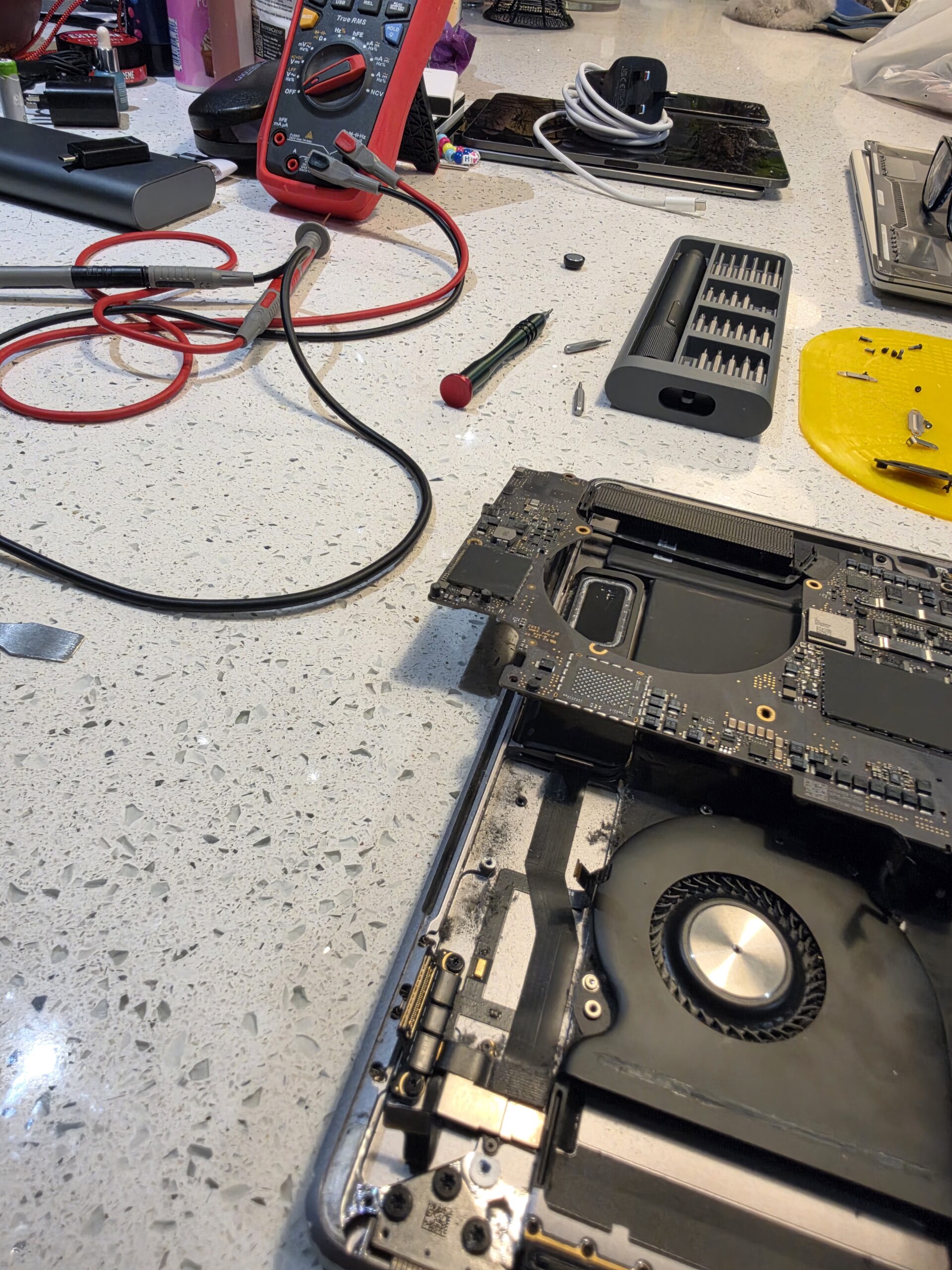
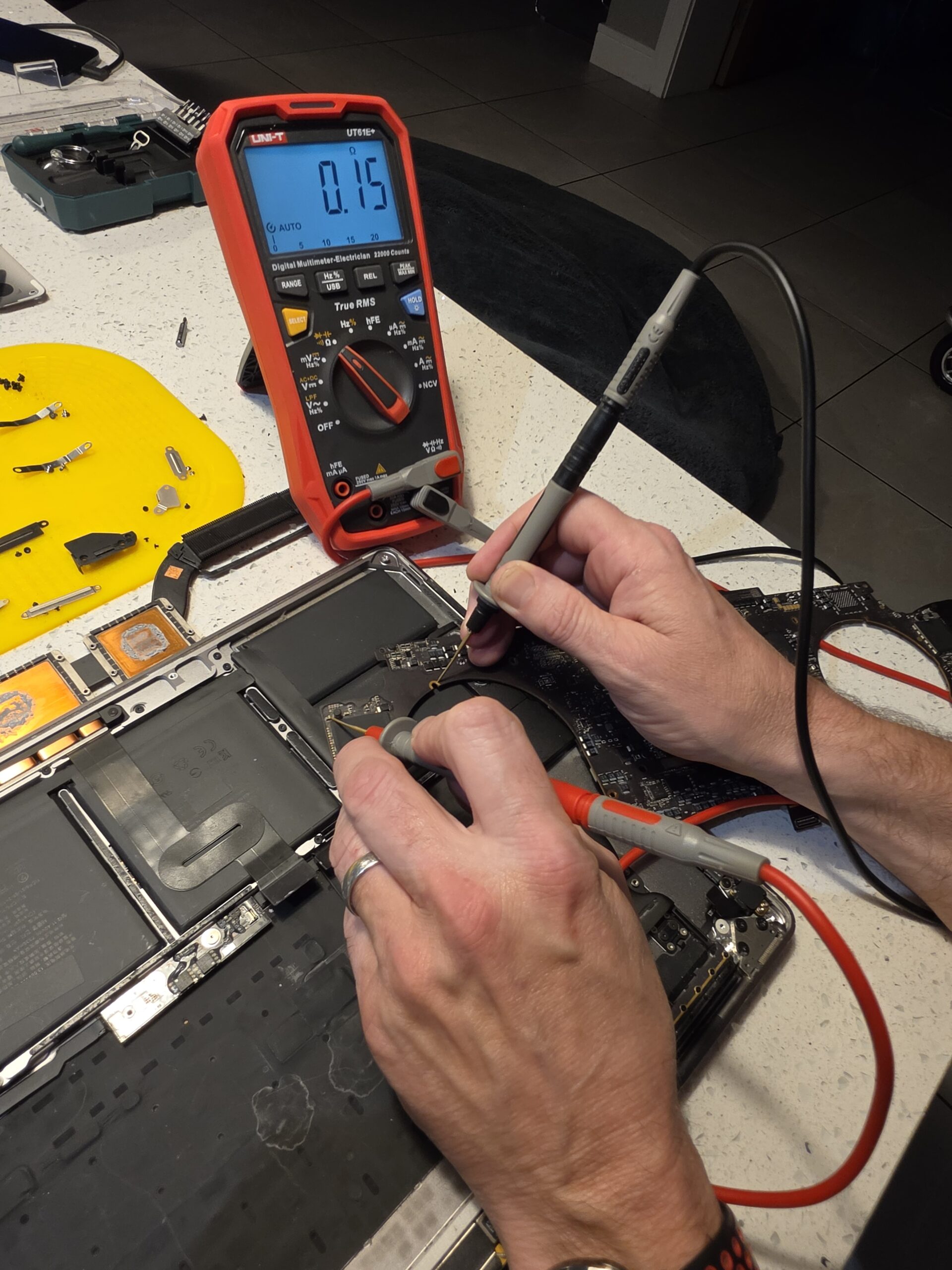
We removed logic board 820-01814-01 and began checking the main power rails. These are the paths that distribute power around the board. Measuring them helps us narrow down a no-power fault before deciding whether any components need attention.
Finding the short circuit
Testing around F7000 and F7001 revealed a dead short. A short can pull a power rail down and prevent a machine from starting, but finding a shorted rail is only part of the job. We still needed to establish where that short originated.
Several components share electrical connections. A short-circuit reading at one capacitor can therefore reflect a fault elsewhere on the same rail. It does not automatically mean that capacitor has failed.
Controlled voltage injection to locate the fault
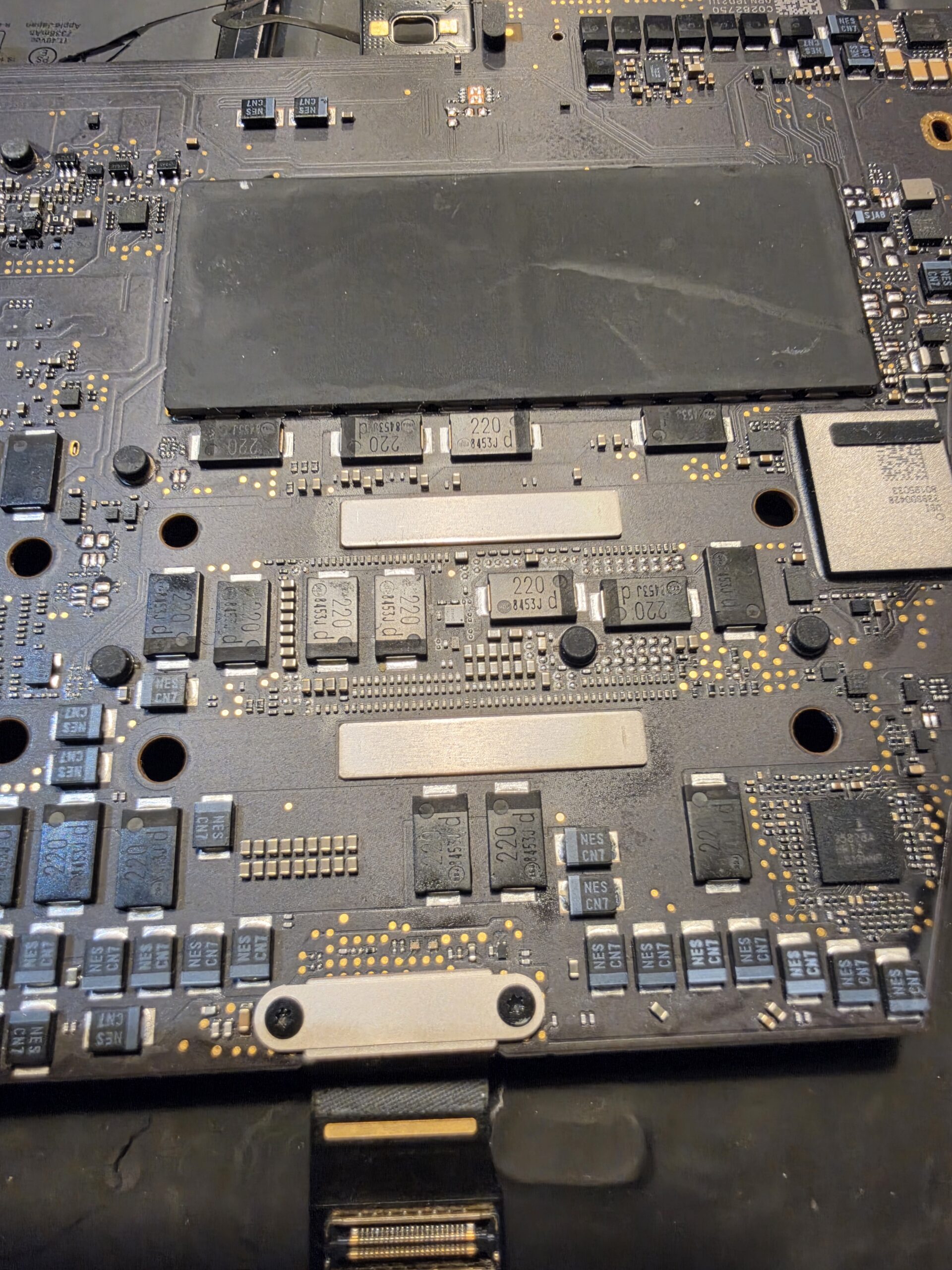
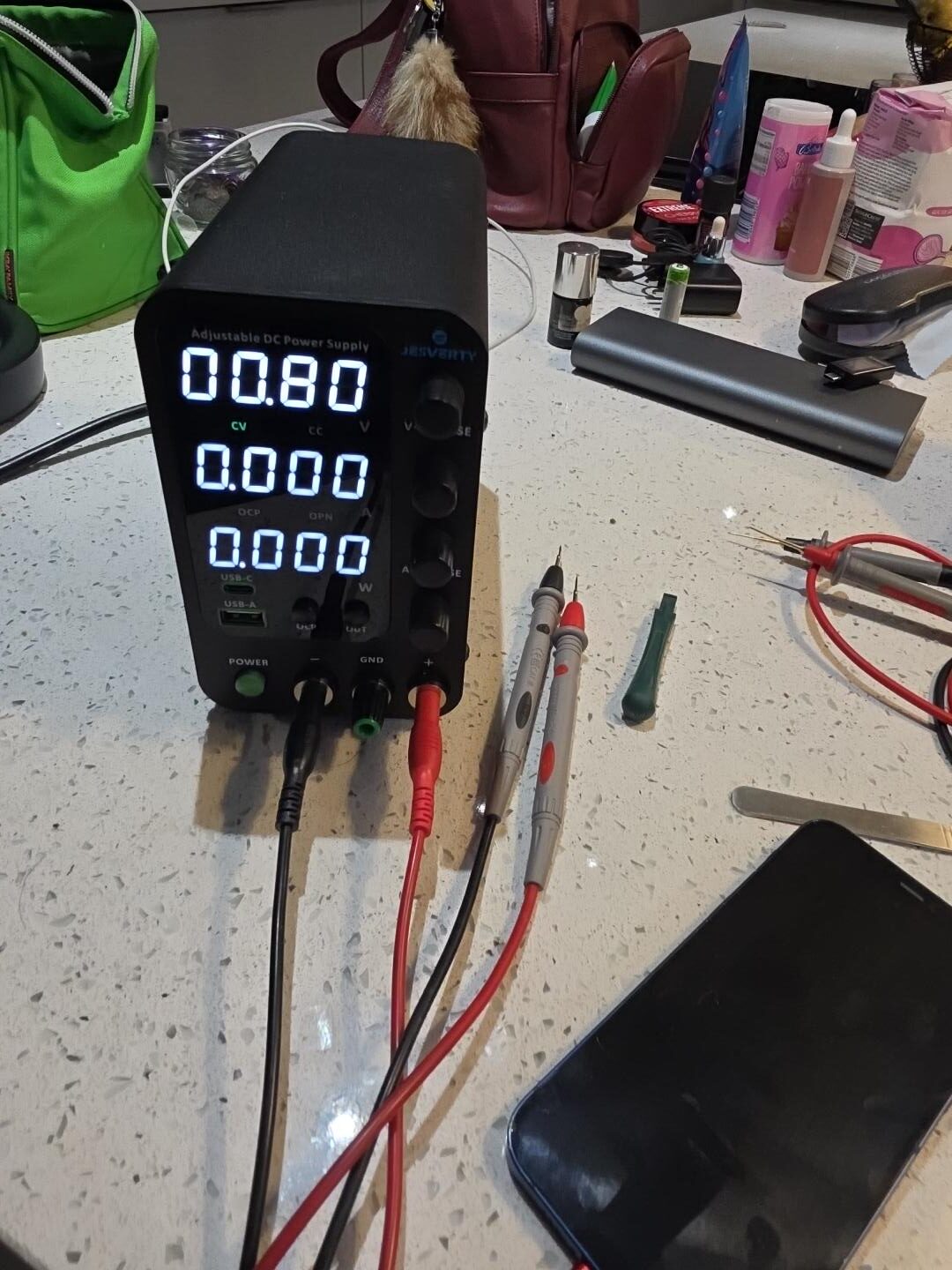
We used controlled voltage injection at approximately 1V on the affected rail, while monitoring the board for components heating. With the voltage and current carefully controlled for the circuit under test, this workshop technique helps locate where energy is being dissipated.
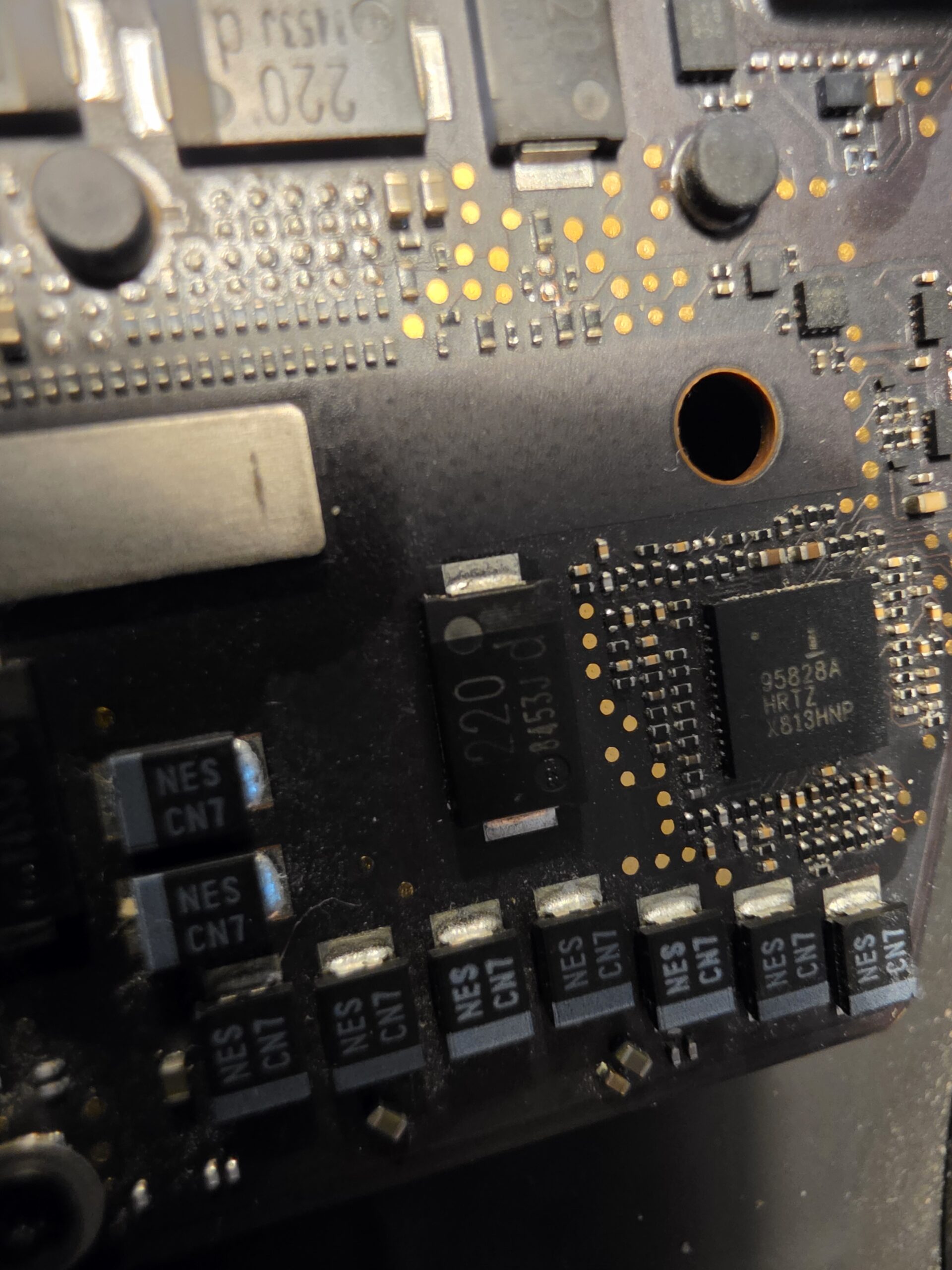
Our measurements led us to C9081, C9074, C9574 and C9573. These capacitors were showing short-circuit readings, so they became part of the next stage of testing.
Removing and testing the suspect components
We began removing the suspect capacitors individually and checking the rail again. The short remained. Removing them did not clear the underlying fault, so fitting replacement capacitors alone would not have fixed this MacBook.
We then removed and isolate-tested around F7000 and F7001 to determine which side of the circuit the short was coming from. That extra step separated a reading seen at nearby components from the actual source of the failure.
The actual fault: NAND/storage circuitry
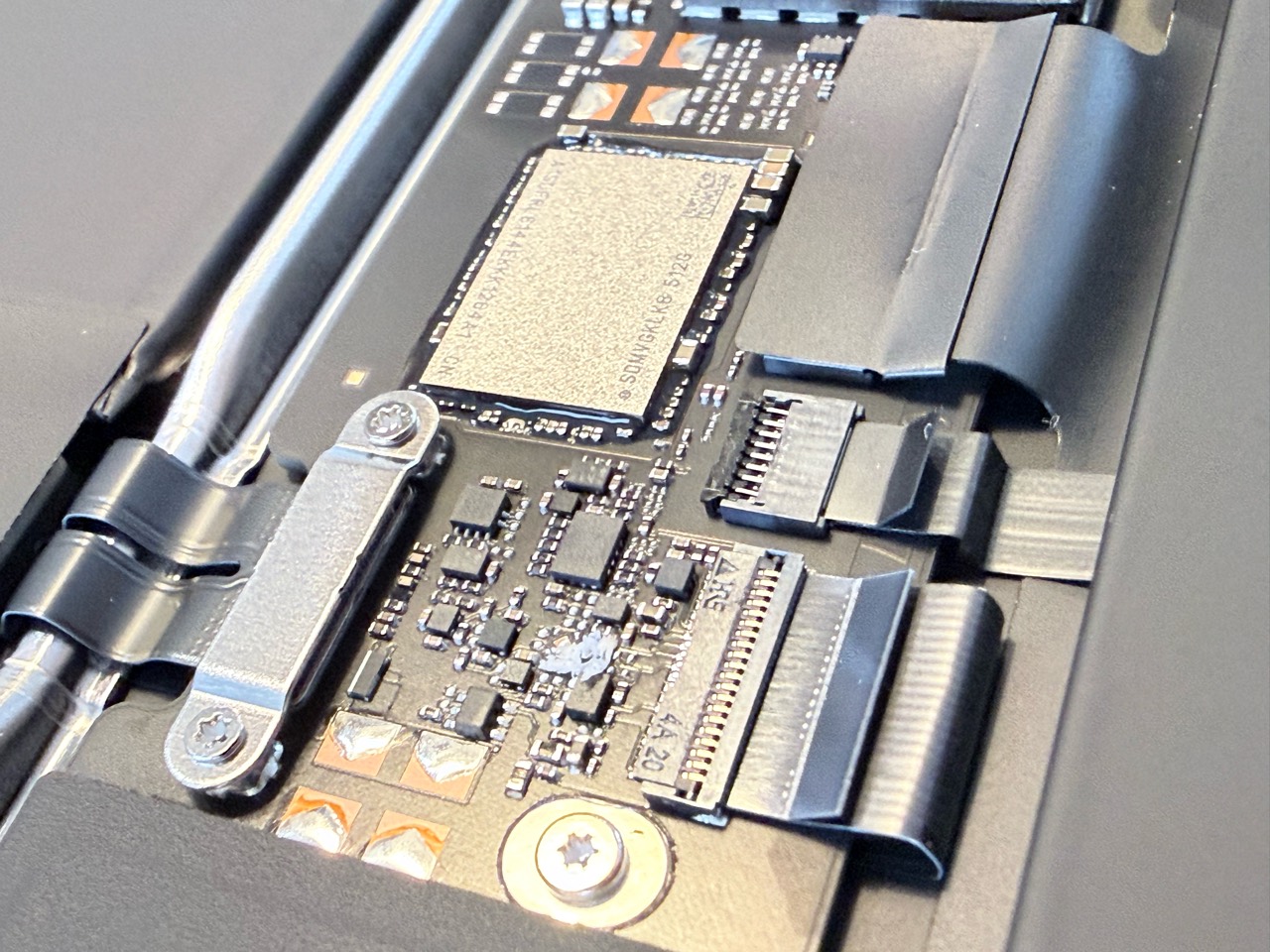
Further board-level diagnosis showed that the short was associated with the NAND/storage circuitry, rather than simply one of the surrounding capacitors. NAND is the flash memory used to store the MacBook’s files and operating system.
On this board, the storage components are soldered directly to the logic board. This was therefore a much more involved fault than swapping a removable drive or replacing a nearby capacitor.
Why we declared this board BER
BER means Beyond Economical Repair. It describes the financial sense of repairing this particular board, rather than claiming that NAND work is technically impossible.
NAND repair or replacement can be possible in specialist circumstances. However, it involves precision work on soldered storage components and can require programming or configuration work. The labour, specialist equipment and complexity all affect the cost.
For an older A1990, that work would normally be uneconomical compared with the value of the machine or the cost of a suitable replacement logic board or MacBook. In this case, we declared the original board BER and explained why further repair spending did not make sense.
Repairability and value are different questions. A technically possible repair is not always the right recommendation for the customer.
Proper diagnostics save customers money
Replacing random parts would not have repaired this machine. The capacitors initially showed short readings, but the short persisted after removal. Proper diagnosis let us identify the real failure before unnecessary replacement parts were fitted.
We would rather spend time finding the fault and explain when a repair is uneconomical than keep replacing components and run up a bill. That is how our family-run business approaches MacBook board repair: clear testing, clear explanations and a sensible recommendation.
Our No Fix No Fee approach applies to eligible repairs, with assessment fees explained separately. The current prices page lists a £30 board diagnostic fee, deducted from the final repair total if you proceed, and a £30 non-refundable liquid-damage assessment fee. We explain applicable fees before assessment and quote further work before it begins.
Belfast computer repair & MacBook repairs
Looking for MacBook repair in Belfast or computer repair in Newtownabbey? Our workshop is in Glengormley, and we welcome customers from Belfast, Carrickfergus, Ballyclare, Antrim and Larne.
Our laptop and MacBook repair service covers Apple MacBooks and Windows laptops, including charging faults, liquid damage and dead or no-power machines. When a fault needs deeper investigation, we provide board-level diagnostics and microsoldering.
If you need MacBook logic board repair near Belfast, we can assess the machine and explain whether component-level work is worthwhile. Different faults lead to different outcomes: our MacBook Pro A2338 charging repair was resolved with a charging port assembly after liquid-damage assessment.
MacBook logic board repair: frequently asked questions
Why is my MacBook only taking 5V?
It may not be completing USB-C power negotiation. The charger, cable, ports or board circuitry may be involved. A 5V reading alone cannot identify the failed component or confirm a NAND fault.
Can a shorted MacBook logic board be repaired?
Often, depending on what has failed and the condition of the board. Some shorts can be resolved at component level; others involve specialist work that may exceed the machine’s value. Testing comes first.
What does BER mean in computer repair?
Beyond Economical Repair. It means the likely cost and work involved make repair poor value for that device, even if a specialist technical repair might be possible.
Do iPhoneBits repair MacBook logic boards in Belfast?
Yes. Our Glengormley workshop serves Belfast and Newtownabbey with MacBook board-level diagnosis and suitable component repairs, including power and charging faults. We explain when a board is not economical to repair.
Is it worth repairing an older MacBook logic board?
It depends on the fault, repair cost and condition of the MacBook. We compare the proposed work with sensible replacement options before recommending a repair. This A1990’s NAND-related fault made its original board BER.
Local advice · Proper diagnosis
MacBook or laptop completely dead?
Don’t assume it needs replacing. Bring it to iPhoneBits for proper diagnosis. For Belfast computer repair, our family-run team will explain what has failed, what the options cost and whether the work makes sense.
MacBook repair · Windows laptop repair · Board-level diagnostics · Microsoldering · Charging faults · Liquid damage · Dead/no-power machines
iPhoneBits
350 Antrim Road
Glengormley, Newtownabbey
BT36 5EQ